Where to Stay· 12 min read·15 November 2024
Three Doors to Machu Picchu: Sanctuary Lodge, Inkaterra Pueblo, Sumaq
Three properties, three different readings of the same mountain. Which corresponds to which guest, read from someone who has placed clients in all three.
By Daniel Ramos
The question most travellers bring to this conversation — which is the best hotel near Machu Picchu? — is the wrong question. It assumes that three very different properties are competing for the same thing. They are not.
The Belmond Sanctuary Lodge is not competing with Inkaterra Machu Picchu Pueblo Hotel for the nature traveller. The Sumaq Machu Picchu Hotel is not competing with either for the traveller who wants to spend five hours inside the archaeological site. These three properties solve three distinct problems for three distinct guests. Understanding which problem you are trying to solve is the only way to choose correctly.
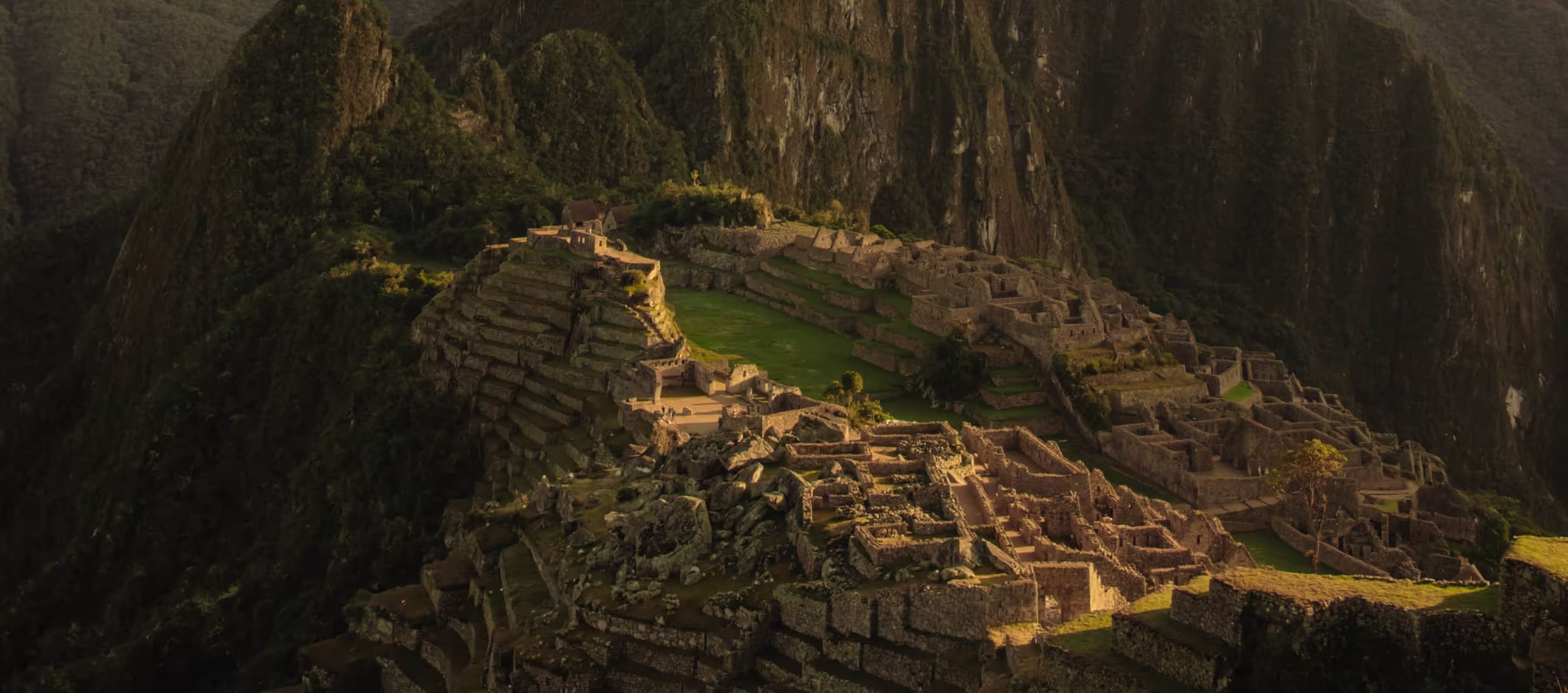
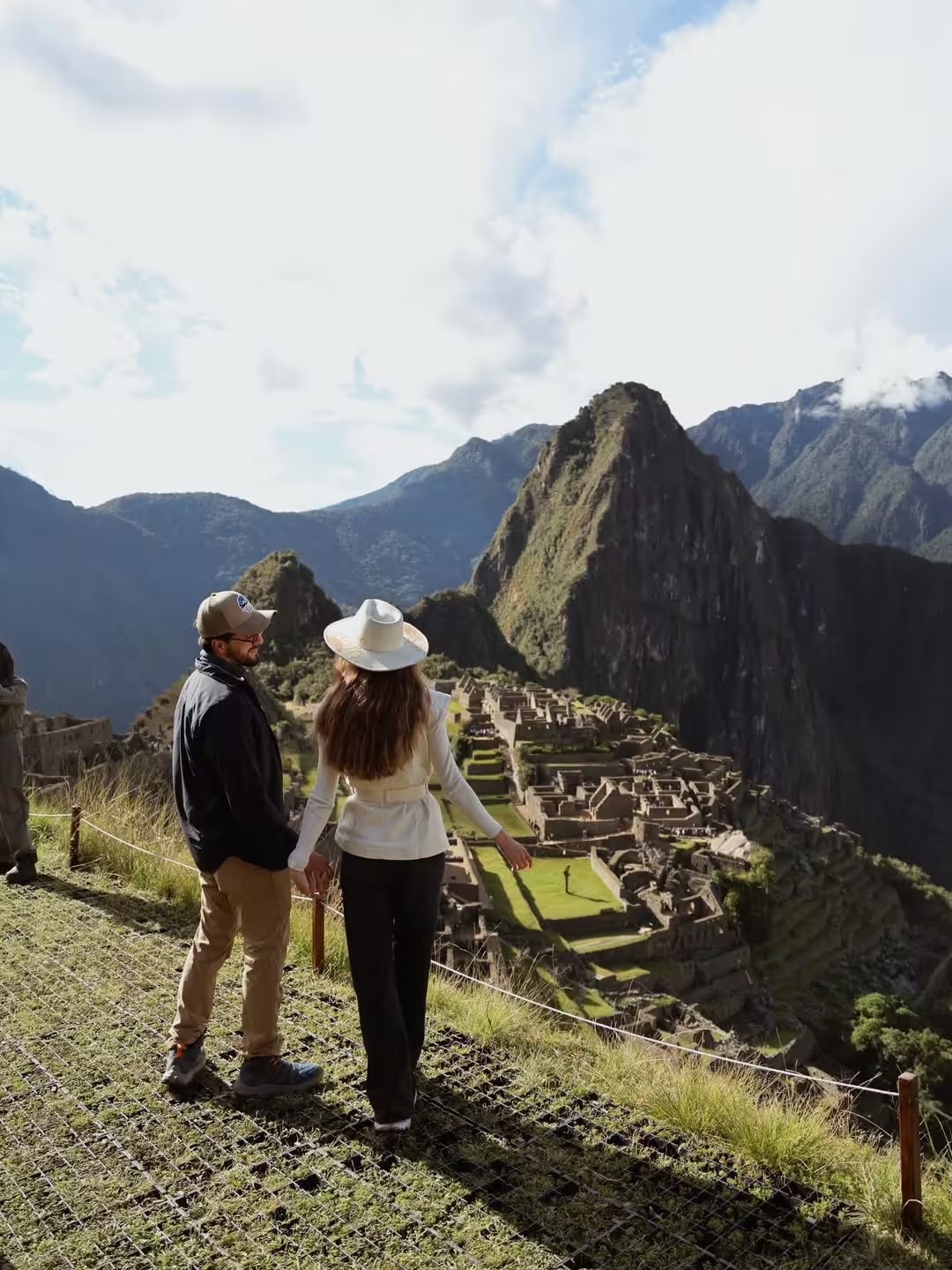
Aguas Calientes, the village at the foot of the mountain, functions as the logistical base for Machu Picchu visits. It sits at 2,040 metres — the lowest point in the Andean circuit, a natural rest after Cusco's 3,400 metres. The site itself sits at 2,430 metres, reached by a bus that leaves from the village centre. The bus takes 25 to 30 minutes. That bus — specifically, the dependency or independence from it — is the central variable in any accommodation decision here.
Belmond Sanctuary Lodge — The Question of Time
Thirty-one rooms, built in 1976, immediately outside the archaeological site entrance. No telephone in the rooms. No television. The restaurant, Tampu, has floor-to-ceiling windows facing the mountain. No spa, no pool, no gym.
What the Sanctuary Lodge offers is structural independence from the Consettur bus. A guest sleeping here walks three minutes to the site entrance. That walk happens at 5:30 AM, before the buses arrive from the village, in the company of perhaps twenty other guests. The site, which routinely holds three to four thousand visitors per day during peak months, can be experienced in its first hour in near-silence.
The same walk happens again at 4:30 PM, as the last tour groups begin their descent. This double visit — dawn and late afternoon, across two different atmospheric conditions, with different crowds and different light — is not available to guests staying in the village. The bus stops running at 5:00 PM. A guest at Inkaterra or Sumaq who wants both visits needs to manage the bus schedule carefully.
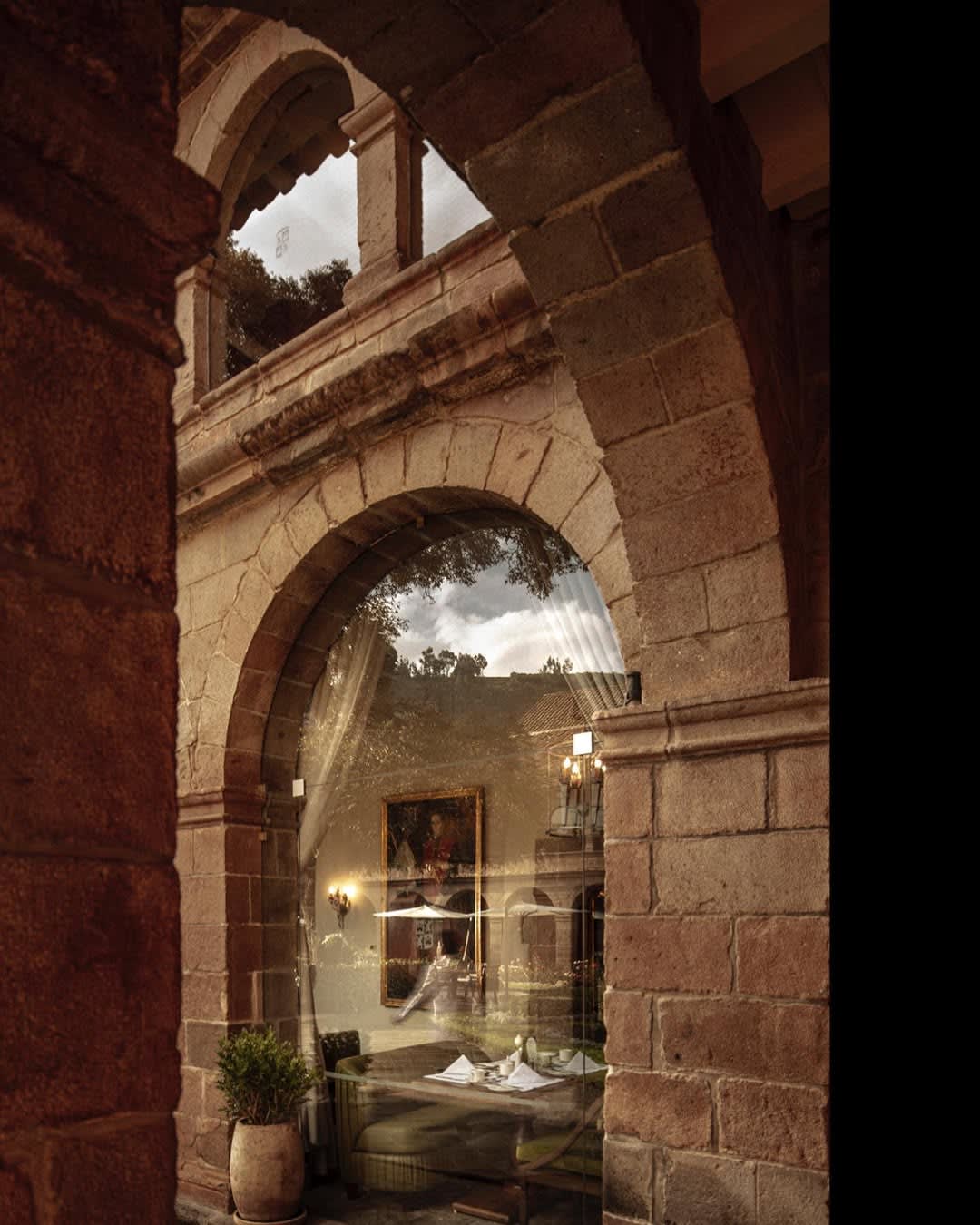
The architecture of the lodge is modest for its price. Corridors are narrow. Rooms average forty square metres, with garden or mountain views. The bathroom is functional, not remarkable. Guests who arrive expecting the design quality of Belmond Palacio Nazarenas in Cusco are comparing the wrong properties. The Sanctuary Lodge charges for its location, not its architecture.
Rate: USD 1,500–2,400 per night, double, before taxes. The most expensive room in Peru by average nightly rate.
The guest who belongs here: A traveller for whom Machu Picchu is the centrepiece of the entire Peru trip — not one stop among several. Someone who wants to arrive at the site before the gates open and return after the gates close. A photographer. A returning visitor who wants to see the site without a crowd.
Kada Virtuoso benefits: Room upgrade when available at check-in; full breakfast daily for two; USD 100 food and beverage credit; late check-out upon request. Booking opens with itinerary confirmation — at least eight months ahead in peak season (June–August).
Inkaterra Machu Picchu Pueblo Hotel — The Question of Setting
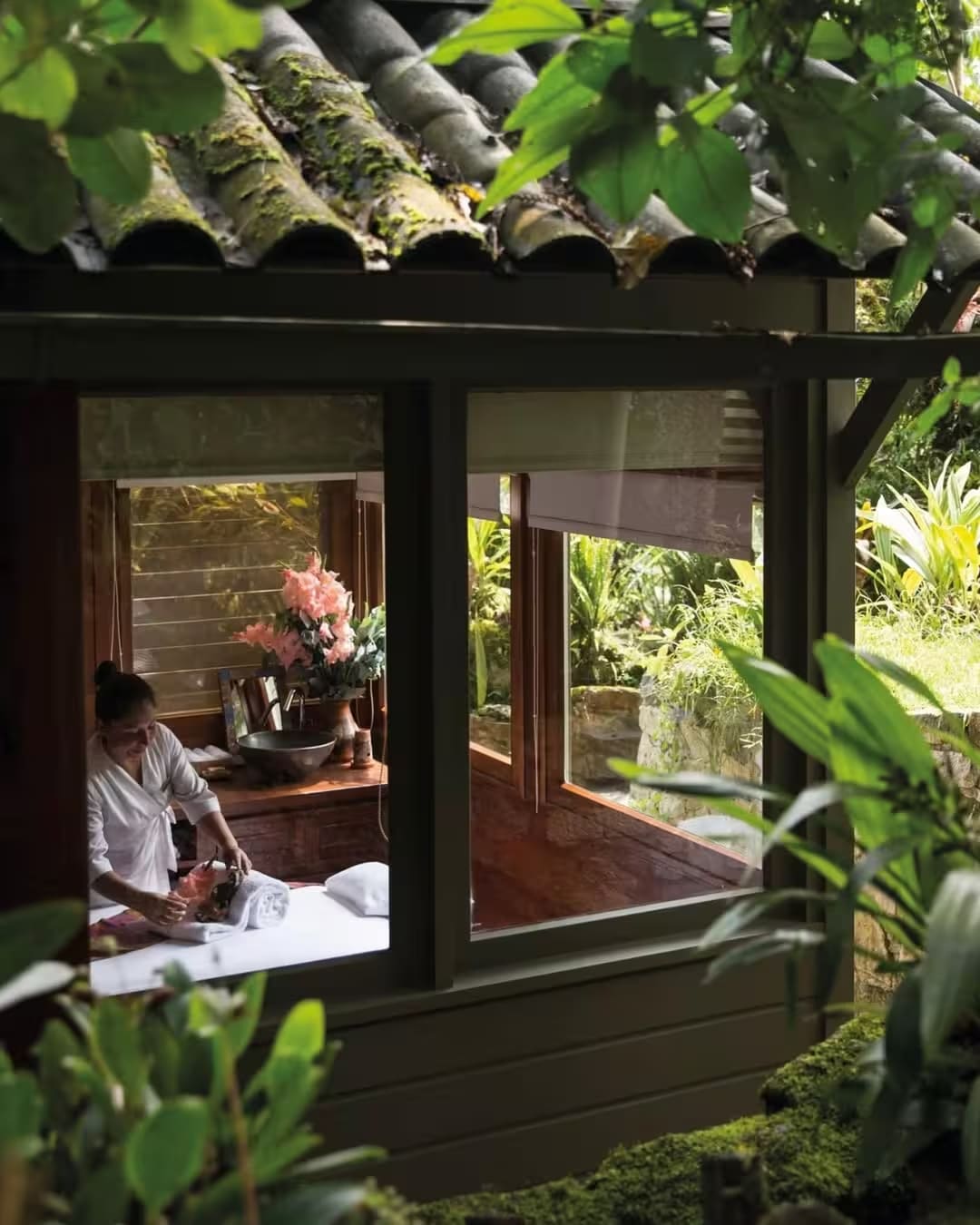
Eighty-three cabins distributed across twelve hectares of private cloud forest, fifteen minutes on foot from the centre of Aguas Calientes. Not on the archaeological site. Not inside the National Park. The hotel's property shares a ridge with the cloud forest that descends from the Machu Picchu massif — a different ecosystem from the citadel above.
The distinction matters because Inkaterra is not primarily a hotel near an archaeological site. It is a cloud-forest property that happens to be adjacent to one. The ornithological observatory on the grounds has recorded 220 bird species, including fifteen threatened species. The orchid sanctuary maintains 372 documented species, the largest private collection in Peru. The spectacled bear sanctuary — a rescued family of three bears, rehabilitated on the property — operates with a naturalist guide programme that has nothing to do with the site up the mountain.
Guests who stay here and spend eight hours each day at Machu Picchu are not using the property correctly. Guests who spend half their time in the cloud forest — guided night walks, dawn birding, the orchid route with a botanist — and half their time at the site are extracting the full value.
The rooms are Andean-hacienda style cabins: stone walls, thatched roofs, wooden floors, private terraces. The building quality is higher than the Sanctuary Lodge's. The restaurant offers Peruvian cuisine with products from the hotel's own gardens and from producers in the Urubamba valley.
Rate: USD 580–980 per night, double.
The guest who belongs here: A traveller for whom the Machu Picchu visit is one day within a larger Urubamba Valley experience — not the only objective. Couples interested in natural sciences. Families with children over eight who would engage with the cloud-forest programme. A guest spending three or more nights in the area.
Kada Virtuoso benefits: Room upgrade when available; daily breakfast for two; exclusive access to the private botanical garden with Inkaterra naturalist; USD 75 spa credit. Booking coordination with property GM through our Virtuoso partnership.
Sumaq Machu Picchu Hotel — The Question of Craft
Sixty-two rooms in the centre of Aguas Calientes, on the bank of the Vilcanota river. Three minutes on foot from the train station. Five minutes on foot from the Consettur bus stop. Owned and operated by the Pérez Albela family, a Peruvian hotelier family without international chain affiliation.
The physical position is the most logistically convenient of the three. The train arrives in Aguas Calientes; the train departs from Aguas Calientes. For a traveller with precise connections — a flight out of Cusco the same afternoon, a same-day return to Lima — minimising transit time between train and accommodation is a real consideration. The Sanctuary Lodge and Inkaterra both require short transfers from the train station. Sumaq is a three-minute walk.
The restaurant Wiñay serves the strongest kitchen of the three properties. The menu draws on Andean and Amazonian ingredients — quinoa from Puno, cocona from the jungle, fresh trout from Titicaca — with a culinary approach that exceeds what the other two properties offer. For the travelling gastronome, this matters.
The spa treatments use coca leaf, muña, and other Andean botanicals in protocols developed with local herbalists. The cultural programme — textile demonstration, coca reading ceremony, Andean cooking class — is coordinated with artisans from surrounding communities, not produced in-house.
What Sumaq does not offer: the structural independence from the bus that Sanctuary Lodge provides, and the private natural setting that Inkaterra maintains. Both absences are deliberate trade-offs for what it does well.
Rate: USD 480–720 per night, double.
The guest who belongs here: A traveller who wants Peruvian hospitality over international brand, who values craft dining over setting, and who has a practical reason to be close to the train station. A returning traveller who wants to support a Peruvian-owned property. A couple spending two nights where gastronomy is a priority.
Kada Virtuoso benefits: Room category upgrade upon availability; daily breakfast for two; preferred table reservation at Wiñay; direct line to GM for personalised requests.
Choosing Between Them: A Practical Frame
One night available, Machu Picchu is the main event: Sanctuary Lodge.
Two or more nights, split between the archaeological site and the natural setting: one night Sanctuary Lodge (dawn access), one night Inkaterra (cloud forest).
Three or more nights, gastronomy and Peruvian culture as priorities alongside the site: Sumaq as base, with Sanctuary Lodge for the dawn access night.
No single formula applies to every itinerary. The variable that changes the calculation most often is duration: a traveller with forty-eight hours in Aguas Calientes makes different choices than one with seventy-two.
One combination we have placed clients in successfully: Sanctuary Lodge the night before the main Machu Picchu visit (dawn entry, no bus), then Inkaterra for the following nights (cloud-forest decompression). This uses the Sanctuary for what it is — not a place to base oneself for several nights, but a place to sleep once, close to the site, when the dawn entry matters most.
What Kada Arranges
The choice of where to sleep in Aguas Calientes is one decision. What happens at Machu Picchu is a separate set of decisions — and it belongs to the itinerary, not the hotel.
The archaeological site does not become a richer experience because of which pillow you slept on the night before. The licensed archaeologist who walks you through the Temple of the Sun, explaining what the trapezoidal niches meant in Inca cosmology, is arranged by the travel planner, not the hotel concierge. The permit for the Inti Punku sector — the Sun Gate — requires weeks of advance booking through authorised operators. None of the three hotels can arrange it at check-in.
What Kada coordinates for clients in Aguas Calientes:
- A licensed archaeologist or historian for the site visit (private, pre-booked, permit-cleared)
- Dawn entry coordination with site staff (particularly relevant for Sanctuary Lodge guests)
- Inti Punku sector access if the traveller's physical condition and permit availability align
- Private dinner in the property of choice, with wine pairing coordinated with the sommelier
- Naturalist-guided cloud-forest programme at Inkaterra if the property is in the itinerary
The hotels provide accommodation, meals, and their own service staff. The curation of what happens in and around the site is arranged before departure.
Expert Perspective
Across twelve years placing clients in Aguas Calientes, I've come to think that the choice of hotel is usually the last question people should be asking, not the first. The first question is: how many hours do you want to spend inside the site, and across how many mornings? That answer determines everything else.
The Sanctuary Lodge makes sense when the answer is: two mornings, both starting before the gates open, and we're willing to sleep in a modest room with a precise location in exchange. Inkaterra makes sense when the site is one part of a larger cloud-forest experience and the family or couple wants a setting that holds its own when Machu Picchu is closed. Sumaq makes sense when the client is Peruvian-culture-minded and values the kitchen over the setting.
We've placed clients in all three, sometimes in the same itinerary. It is rarely a question of which one is better. It is a question of what they are solving for.
Daniel Ramos, Co-Founder & CEO, KADA Travel
A Practical Note
Booking lead time:
- Sanctuary Lodge: eight to twelve months in high season (June–August); four months in shoulder season (April–May, September–October). At 31 rooms, suites book out to thirteen months ahead for anniversary and honeymoon dates.
- Inkaterra Machu Picchu Pueblo Hotel: four to six months in high season; two months in shoulder.
- Sumaq: two to four months year-round.
Seasons: May through September is the dry season — fewer clouds at the site, more reliable visibility, higher rates. April and October are shoulder months with lower rates and intermittent cloud cover that can produce atmospheric photographs. November through March is the rainy season; Machu Picchu receives significant precipitation, the site can be obscured, and the Inca Trail closes in February.
Altitude: Aguas Calientes sits at 2,040 metres — the lowest stop in the standard Andean circuit. Most travellers who have spent two or more days acclimatising in Cusco (3,400m) will find Aguas Calientes restful. The site itself at 2,430 metres does not typically cause altitude-related symptoms in acclimatised travellers.
Site access regulations: The Ministerio de Cultura revised entry protocols in 2024. Each ticket is time-stamped and circuit-specific. Entry without a licensed guide is no longer permitted. Permits for early entry and specific sectors — Inti Punku, Huchuy Picchu — require advance booking through authorised operators. These logistics are coordinated by Kada when building the itinerary.
Written by Daniel Ramos
Frequently Asked
For a single night with the specific objective of a dawn visit — walking to the site before the buses arrive — and a late-afternoon return, yes. For a multi-night base without that objective, the room quality does not justify the rate relative to the other two properties. The honest calculation: if the double visit matters, it is worth it. If it does not, Inkaterra or Sumaq deliver better value.
Sumaq's restaurant Wiñay is the strongest kitchen of the three, with a menu that treats Andean and Amazonian ingredients with more culinary intention than the other two properties. Inkaterra's restaurant has good local sourcing and a pleasant setting. Tampu at the Sanctuary Lodge serves correct international cuisine with an unmatched view of the mountain.
Yes, and it is often the format we recommend. One night at Sanctuary Lodge (dawn access) plus one or two nights at Inkaterra (cloud-forest setting) gives the traveller both the access advantage and the natural setting. The logistics of changing hotels in Aguas Calientes are simple — the village is entirely walkable.
The Sanctuary Lodge in high season books out at eight to twelve months. If your travel dates are fixed and fall between June and August, begin the conversation immediately. Inkaterra and Sumaq have more availability; four to six months is typically sufficient for both.
Machu Picchu receives over 1,900mm of annual rainfall, most between November and March. Morning visits during the dry season are generally clear; afternoon cloud cover is common year-round. Ponchos are distributed at the site entrance. The visit is not cancelled for rain. The Sanctuary Lodge's proximity means less weather exposure during transit; Inkaterra and Sumaq guests face the additional bus ride in conditions.
Design Your Journey
Design your bespoke Peru journey
We talk. We listen. Then we design an itinerary that belongs only to you.
Start Planning