Where to Stay· 13 min read·2 December 2024
Sanctuary Lodge at Machu Picchu: The Premium Is for the Location, Not the Hotel
It is a modest hotel that charges the price of its irreplaceable geography. The right question is not whether it is worth it — it is which kind of traveller is the geography worth it for.
By Daniel Ramos
The Belmond Sanctuary Lodge is a modest hotel. Thirty-one rooms, corridors too narrow for two people to pass comfortably, no pool, no spa, no gastronomy worth the flight. Measured by the infrastructure metrics applied to any hotel at its price point — and the price point is significant — it does not compete with the Belmond properties in Cusco, or with Inkaterra's cloud-forest estate below, or with Sumaq's polished contemporary interiors in Aguas Calientes.
And yet it charges what it charges. The question most travellers ask is: why?
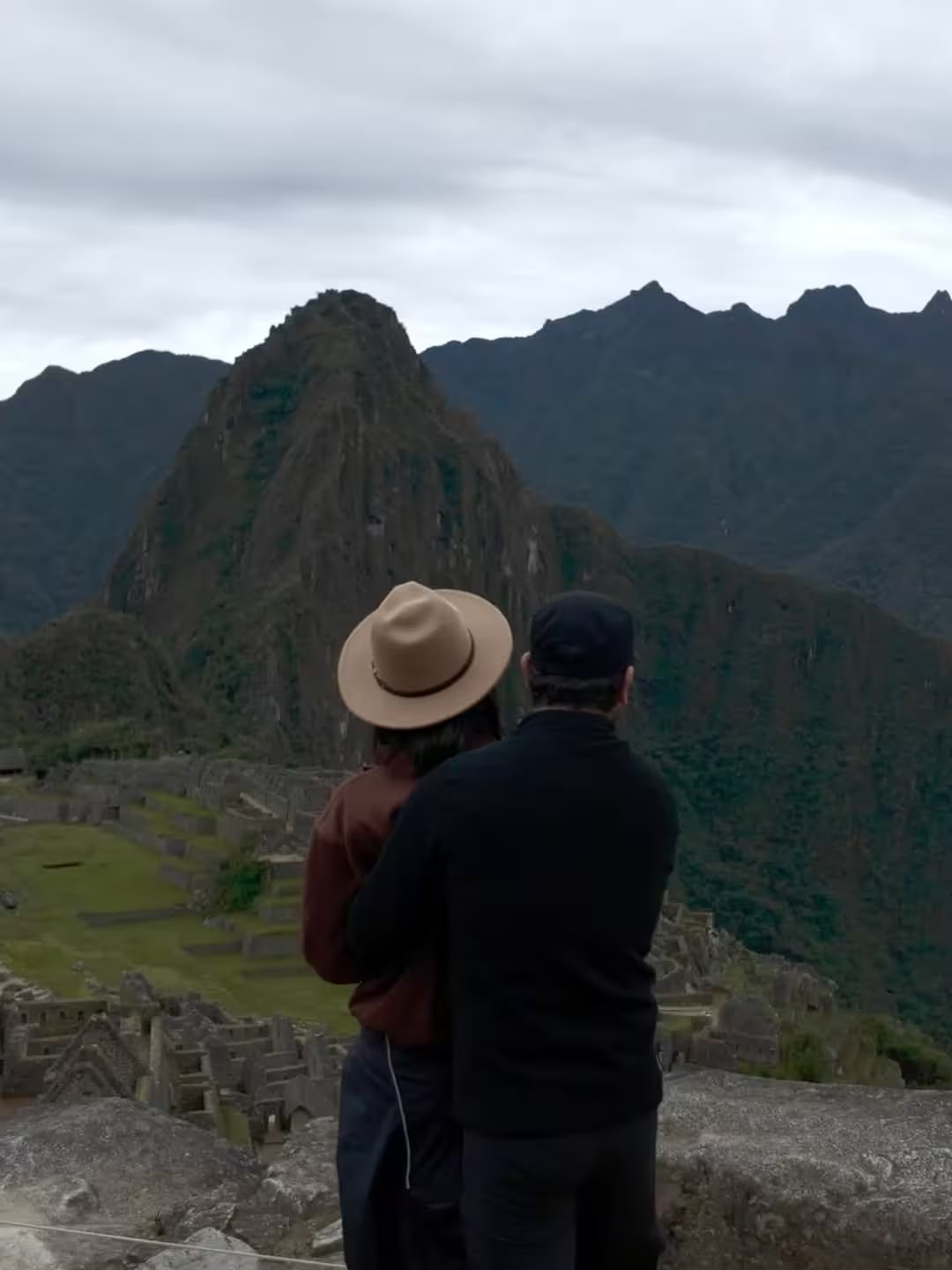
The answer is geographical. The Sanctuary Lodge sits at 2,400 metres above sea level, at the entrance to the Machu Picchu archaeological site. Not nearby. Not a short bus ride. At the entrance — three minutes on foot from the gate, with no road, no bus stop, no ticket queue between the hotel and the site. In the history of the sanctuary, it is the only hotel that has ever occupied this position. It is the only hotel that ever will.
This is what the premium buys. Not the room. Not the restaurant. Not the service. The geography.
Once that is clear, the question changes. It is no longer whether Sanctuary Lodge is worth it — that framing assumes a universal answer. The real question is more specific: for which kind of traveller does that geography justify the premium? The answer is not the same for every guest. Kada has placed clients here for fifteen years, and the criterion is always the same: before asking how much, ask what you came to Machu Picchu to do.
The location: what the premium buys specifically
Three advantages belong exclusively to Sanctuary Lodge guests. All three are consequences of position rather than hotel offerings.
The first is the early entry. The site opens at 5 AM for Sanctuary Lodge guests — the only category of visitor able to walk to the entrance before the first buses depart Aguas Calientes at 5:30. That thirty-minute window is not a trivial margin. At 5 AM, the agricultural terraces are empty. The light is horizontal, arriving at the stone from the east at angles it will not repeat until the following dawn. The Templo del Sol at that hour contains nobody but the couple or individual who walked from the lodge. The site is not yet performing for visitors; it is simply existing. That version of Machu Picchu cannot be purchased in Aguas Calientes.
The second is the evening return. When the site closes to the general public at 5:30 PM, Sanctuary Lodge guests receive thirty additional minutes before returning to the hotel. The buses are gone. The tour narration has stopped. The terraces at that hour hold a few dozen guests at most. The light in the dry season at 5:30 PM is low and golden and empties the shadows from the stone differently than any other hour. The evening return is not a marketed feature of the lodge — it is a consequence of walking three minutes back rather than descending forty-five minutes to the bus stop.
The third is more architectural. Aguas Calientes sits at 2,040 metres. The Sanctuary Lodge sits at 2,400 metres — 360 metres higher, at the altitude of the site itself. For travellers with any sensitivity to altitude change, this difference is not abstract. The body that sleeps at site altitude has already acclimatised to what it will need at 6 AM the following morning. The guest descending from Aguas Calientes arrives at the gate with the altitude differential still in the legs — the body is still adjusting to the 360-metre gain as it walks through the entrance. The Sanctuary Lodge guest walks out of bed and into the site at the same elevation it has been breathing all night. Sleep at site altitude is also qualitatively different from sleep at 2,040 metres — deeper and more stable, without the oxygen-adjustment disruption the first night at a higher elevation typically produces. For travellers who arrive at Sanctuary Lodge via the Sacred Valley route, having already acclimatised to elevations above 2,400 metres, the transition to the site is essentially seamless.
These three advantages — early entry, evening return, sleeping at site altitude — are not the hotel's amenities. They are what happens when you sleep at the entrance of Machu Picchu.
The infrastructure: what the premium does not buy
It is worth being precise about this, because mismatched expectations are the source of most Sanctuary Lodge disappointments.
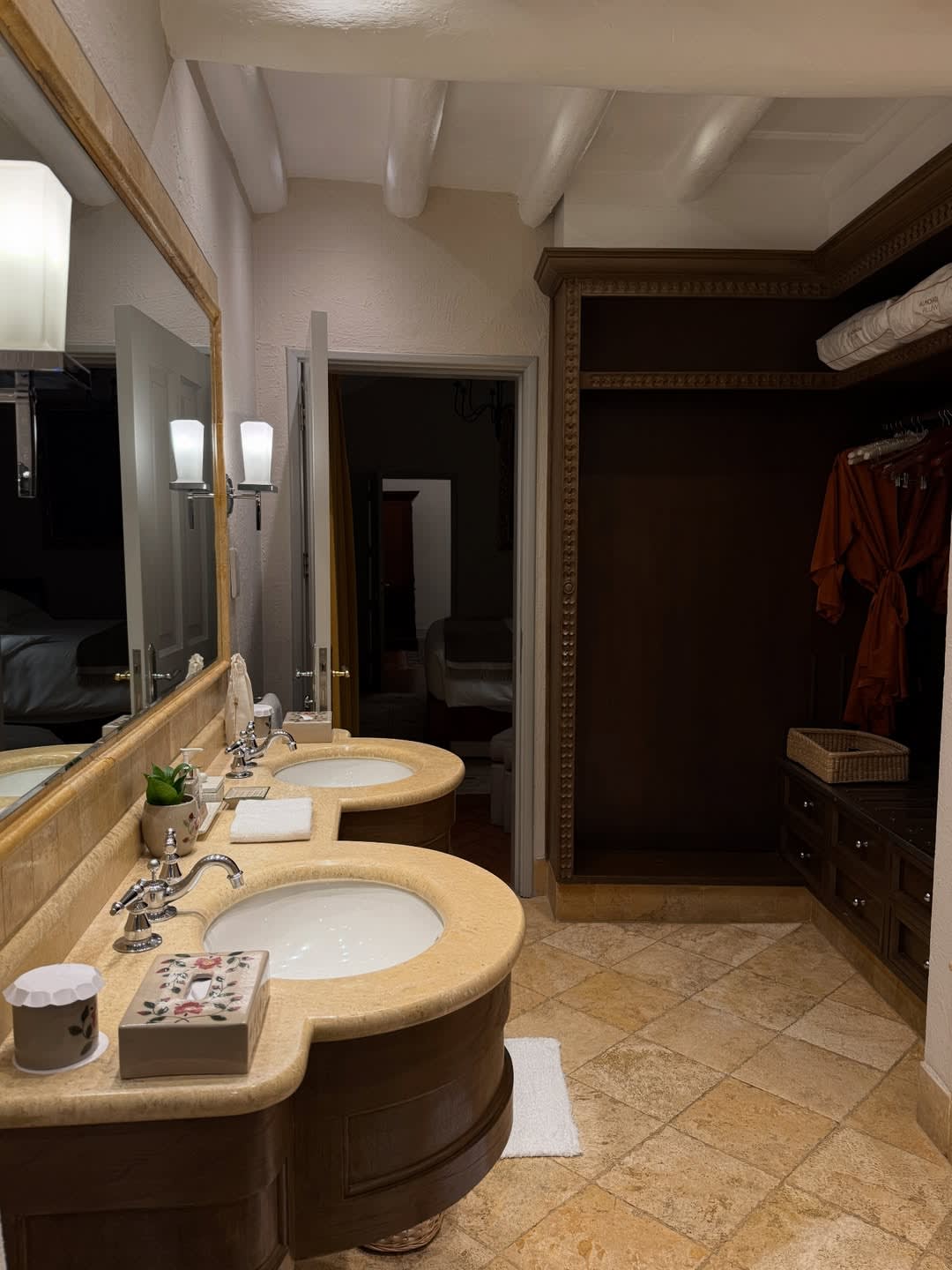
The rooms average forty square metres. Comfortable: a well-made bed, a correct bathroom, a garden or mountain view, adequate linens. Not luxurious in the sense that the Belmond Monasterio in Cusco is luxurious — not the vaulted ceilings, not the colonial grandeur, not the sense of occupying a historically significant building. The corridors are narrow. The common areas are small — a lobby, a bar, a dining room sized for thirty-one rooms. There is no pool. There is no full-service spa. The gym is limited.
The restaurant, Tampu, serves correct international cuisine without gastronomic pretension. It does not compete with the top tables of Cusco or Lima. It is the only restaurant at site altitude, which makes it the best possible option for breakfast before the first site visit and for the rest between two site entries. The wine list is functional. The cooking is reliable. Nothing on the menu is a reason to extend the stay.
WiFi in the rooms is constrained by the lodge's satellite connection and the altitude of its location. Guests who need continuous connectivity for work will find this limiting. Guests who chose Machu Picchu specifically to be unreachable will find it irrelevant.
The honest characterisation: Sanctuary Lodge is a well-maintained mountain lodge with a small footprint and a single extraordinary asset. The premium is not distributed across the infrastructure. It is concentrated entirely in the position on the hillside.
The time calculation: what the geography saves
There is a cost to Machu Picchu that does not appear on the hotel bill. It is the cost of time.
A guest staying in Aguas Calientes — even at a well-organised property like Sumaq or Inkaterra Machu Picchu Pueblo Hotel — faces a daily logistics sequence that consumes a significant part of the day available to visit the site. The first bus from Aguas Calientes departs at 5:30 AM. The queue at the bus stop before first departure, in high season, begins before 5 AM. The bus ascent takes twenty-five minutes. The queue at the site entrance gate in July or August can add another thirty to forty-five minutes. A guest who left the hotel at 4:45 AM does not reach the agricultural terraces before 6:30 AM.
The return mirrors it. The last bus from the site to Aguas Calientes departs at 5:30 PM. A guest planning to take that bus must begin descending by 5:15 — which means leaving the terraces no later than 5 PM. The effective visit window for an Aguas Calientes guest is approximately 6:30 AM to 5 PM, with the bus timetable enforcing both endpoints.
The Sanctuary Lodge guest begins differently. The walk from the hotel to the site entrance is three minutes. There is no queue — early entry guests arrive before the ticket counters reach capacity. Effective arrival at the site: 5:05 AM on a typical morning, not 6:30. That difference — ninety-five minutes — unfolds during the only window in the day when the site resembles itself before the modern tourist era. Fifty visitors maximum. No narrated tours audible across the terraces. The stone in the first light.
The return follows the same logic. When the site closes at 5:30 PM, the lodge guest is not racing a bus schedule. They are already two hundred metres from their room. The thirty additional minutes after public closing are not a perk — they are the inevitable geometry of sleeping at the entrance.
It is worth noting what those hours contain. The 5:00 to 6:30 AM window is not merely earlier — it is categorically different from any other part of the day. The site at that hour belongs to the guest in a way it does not at 9 AM, when the first tour groups arrive, or at noon, when the terraces reach their daily maximum. The lodge guest and the Aguas Calientes guest visit the same archaeological site, in the same country, on the same day. They do not have the same experience.
Counted across two nights: the Sanctuary Lodge guest recovers approximately four to five hours of site time that the Aguas Calientes guest spends on transport, queuing, and timetable management. For some travellers, those hours are the trip.
The price calculation: the premium in perspective
Understanding the Sanctuary Lodge premium as a geography purchase rather than a hotel purchase changes the framework for evaluating it against the total cost of a Peru journey.
The premium over an Aguas Calientes night — at a well-positioned property like Sumaq or Inkaterra Machu Picchu Pueblo — is approximately the cost of a domestic flight within Peru: Lima to Cusco, or Cusco to the Amazonian gateway at Puerto Maldonado. Framed this way, the decision is not "does this room cost too much" — it becomes "which component of this Peru trip do I prioritise most?" The traveller who answers "Machu Picchu, above all else" has a different calculation than the traveller who answers "the Amazon is equally important to me."
Two additional nights in the Sacred Valley at Belmond Río Sagrado, or a full-board journey on the Andean Explorer rail route, or the first flight into the Manu Biosphere Reserve — any of these absorb a comparable premium and deliver a comparable singularity of experience. The Sanctuary Lodge premium is not unique in its size. It is specific in what it purchases: not more nights elsewhere, but the particular geography of Machu Picchu's entrance, at 5 AM, with no other decision left to make.
The lodge's photography programme — USD 350 per person — is worth naming separately. It grants access at 4:30 AM with a photography guide and tripod positions reserved before public entry begins. For serious photographers, the programme is the argument for the stay; for travellers with photographic intentions but not professional demands, the 5 AM general lodge access achieves a similar result at no additional cost.
The specific traveller equation
The geography justifies the premium for a specific kind of traveller. Kada identifies four, consistently.
The first is the guest who came to Peru primarily for Machu Picchu — not as one item on a balanced itinerary, but as the event and the rest of the trip as context. For this traveller, investing in the location is consistent with the purpose of the journey. Two nights at Sanctuary Lodge, with the full double-visit arc, is the complete expression of that intention.
The second is the returning traveller: someone who visited Machu Picchu on a first Peru trip and found the bus logistics and crowd density diluted the experience. They return specifically to have it differently. The Sanctuary Lodge is what that return looks like.
The third is the serious photographer. The 5 AM entry and the post-closing thirty minutes bracket a full day of site light: dawn, morning, midday, afternoon, golden hour, and closing dusk. No arrangement from Aguas Calientes captures this arc in a single day.
The fourth is the couple on honeymoon or anniversary whose Peru itinerary is structured around one transformative moment at altitude. For this couple, sleeping at the entrance is not an extravagance — it is the decision that makes the experience architecturally complete.
For the first-time traveller distributing an ambitious budget across multiple Peru components — MP as one of five equal destinations — the calculation runs differently. The additional investment in the lodge may be more proportionally placed elsewhere in the itinerary. Kada makes this case honestly when the design calls for it.
The Kada formula: two nights, two hotels, one decision
For travellers who want the Sanctuary Lodge experience without centring the entire Machu Picchu stay there, Kada designs the two-night formula with consistency: one night at Sanctuary Lodge and one night at Inkaterra Machu Picchu Pueblo Hotel.
The two properties deliver distinct versions of the same altitude. Sanctuary Lodge provides the 5 AM entry and the post-closing minutes. Inkaterra Machu Picchu Pueblo offers twelve hectares of cloud-forest garden, a private reserve of native orchid species, nocturnal birdwatching with a naturalist guide, and altitude comfort in a property built to inhabit the forest rather than manage access to the ruins.
Sequencing matters. Kada places Sanctuary Lodge first as a rule — arriving via the Belmond Hiram Bingham train in the early afternoon, with the dawn site visit on day one and the late afternoon return on day two. Inkaterra follows: an evening in the cloud-forest reserve, a morning watching the mist lift from the tree canopy, before descending to Aguas Calientes.
Two nights, two hotels, two versions of what it means to sleep at Machu Picchu's altitude. The formula achieves what neither property achieves alone: the full temporal arc of the site and the ecological experience of the cloud forest that surrounds it.
What Kada coordinates with Sanctuary Lodge
Availability requires eight to twelve months of advance coordination for peak-season dates — June through August especially, when school holiday demand compresses the calendar. Kada holds a working relationship with the Belmond reservations team that provides access to availability before it reaches public booking channels.
The photography programme — the 4:30 AM access with guide and reserved positions — requires a separate reservation from the room and books quickly. Kada coordinates it at the time of room booking, not on arrival, for clients with photographic intentions.
Kada adds an archaeological briefing to the programme: a one-hour session with a specialist guide before the pre-dawn entry that maps the site's architectural sequence and identifies the structures and light conditions most relevant to the early morning. The briefing is not a lodge service — it is Kada's preparation layer.
The Belmond Hiram Bingham train from Cusco through the Sacred Valley is the correct arrival sequence for Sanctuary Lodge guests: the transition through declining altitude and increasing forest density before the sanctuary appears. Kada coordinates the train booking in conjunction with the room reservation.
Virtuoso benefits apply: confirmed upgrade at booking, daily breakfast included, and late checkout where the property allows.
Expert Perspective
In fifteen years of placing clients at Sanctuary Lodge, the conversation that precedes every booking is the same. Not "how much is the room" — by the time a client reaches that question they have already done the research. The conversation is: "what do you want your first morning at Machu Picchu to look like?"
If the answer is "I want to be there before anyone else" — and they mean it as a priority, not a preference — then the decision is already made. There is only one property on earth from which you can walk to the entrance of Machu Picchu from your bed. That is not a hotel feature. That is a geographical fact.
What I tell clients is this: the premium you pay at Sanctuary Lodge is not for the room. The room is modest and honest about it. The premium is for a location that cannot be replicated, manufactured, or approximated by any other hotel at any price. You are paying for the geography of the Andes, specifically as it exists at one exact point on the hillside. Whether that geography justifies the premium depends entirely on what you came to do.
Daniel Ramos, Co-Founder & CEO, KADA Travel
A Practical Note
Booking timeline: Eight to twelve months for peak season (June-August). Sanctuary Suites require longer lead time than standard rooms. The photography programme books separately and fills before peak dates.
Room categories: Standard rooms (approximately 40m²) face the garden or the mountain slope. Sanctuary Suites offer additional space and an improved orientation toward the Huayna Picchu face. Kada advises on the upgrade based on the traveller's overall itinerary weight toward Machu Picchu.
Price reference: Standard rooms range approximately USD 1,500-2,400 per night depending on season. Aguas Calientes alternatives — Sumaq and Inkaterra Machu Picchu Pueblo — range approximately USD 500-800 per night. The Sanctuary Suite category carries a further premium.
Altitude: Sanctuary Lodge sits at 2,400 metres — 360 metres above Aguas Calientes (2,040m). Guests with altitude sensitivity should acclimatise via the Sacred Valley and/or Cusco before descending to the Aguas Calientes-MP corridor. Machu Picchu is lower than Cusco; the approach via the Sacred Valley and Hiram Bingham train builds in natural acclimatisation.
Connectivity: WiFi is satellite-based and intermittent in rooms. Plan accordingly.
Written by Daniel Ramos
Frequently Asked
Position. Sumaq and Inkaterra are well-designed properties with stronger infrastructure than Sanctuary Lodge — better rooms, better food, better connectivity. What they cannot provide is the pre-bus site access: the 5 AM entry, the post-closing thirty minutes, breakfast at site altitude. Any guest staying in Aguas Calientes is dependent on the bus schedule, which introduces both a floor on the morning departure time and a ceiling on the evening. Sanctuary Lodge removes both constraints.
One night captures the core experience: the 5 AM entry on the morning after arrival. The second night completes the arc — an unhurried late afternoon on the second day, the site in its post-closing quiet. Kada recommends two nights when the overall itinerary allows. One night is a strong investment; two nights makes it complete.
The first public bus from Aguas Calientes departs at 5:30 AM. A guest already queuing at 4:50 AM can reach the site terraces by 6:10-6:30 AM — still early relative to the midday crowd, though not within the 5 AM lodge window. This is a legitimate arrangement, and Kada designs itineraries around it when clients are distributing their budget proportionally across multiple Peru destinations. The experience is different; it is not absent.
Cloud cover at dawn is a real variable, particularly outside the dry season. In June through September, clear dawns are the norm; in November through March, morning mist is frequent. A cloudy dawn at 5 AM in Sanctuary Lodge is still an empty site — which carries its own atmospheric quality distinct from the sunlit terraces. Kada discusses seasonal probabilities before booking. The photography programme includes guidance on low-light conditions.
For clients whose itinerary places Machu Picchu as the primary event, the Sanctuary Suite extends the investment that brought them to the lodge. For clients balancing MP with an ambitious multi-destination Peru itinerary, the standard room captures the essential asset — the location — without the additional premium. Kada evaluates this per client based on the full itinerary design.
Design Your Journey
Design your bespoke Peru journey
We talk. We listen. Then we design an itinerary that belongs only to you.
Start Planning