The Art of Travel· 15 min read·13 November 2024
A Honeymoon in Peru: Ten Days to Discover How You Travel Together
Not the trip to see the country. The trip in which the couple discovers the different kinds of silence they share — between the Lima kitchen, the altitude of the valley, the dawn at the sanctuary, and the first return.
By Katherine Cjuiro
Peru is not a country you see from a window. It is a country that requires the body — the adjustment to altitude, the adjustment to ceremony, the adjustment to a kind of silence the city you came from does not produce. A honeymoon in Peru that treats these adjustments as obstacles misses the point. The adjustments are the point.
Most couples arrive with a question they have not yet articulated: what kind of travellers are we? Not individually — they may each have travelled for years — but together. How does she move through a market: touching everything, or purposeful, looking for one thing? Does he slow down at altitude or push through it? When the ceremony begins and the paqo's voice is steady and the mountains are close and there is no English in the room, do they reach for each other's hand or each hold the moment separately?
A well-designed Peru honeymoon does not answer these questions on the couple's behalf. It places them in the precise situations where the answers become visible.
Lima receives them first. The city requires nothing on the first day — no archaeology, no altitude, no ceremony. Rest, good food, the adjustment from one time zone and one hemisphere to another. The Sacred Valley follows. The valley runs at a frequency the city does not: wide, agricultural, slower in every measurable way — meals that take longer, mornings that begin earlier not from obligation but from the quality of the light. On the fifth day, a paqo Q'ero — a traditional Andean priest — receives the couple in ceremony beside a mountain. The trip crosses a threshold it will not recross. After the ceremony: Machu Picchu, reached by train, the sanctuary at dawn before anyone else arrives. Then Cusco, the colonial capital, at the altitude the couple has been climbing toward since Lima — but by then, the body is ready. A tenth day for whatever they need: altitude, air, motion, silence. And then the flight home.
This is the architecture. Ten days, four movements, one ceremony at the centre. Each movement does something specific to the couple's relationship with the trip, with each other, with the country. Lima acclimates. The valley decelerates. The ceremony centres. The sanctuary isolates — productively. Cusco restores. The adventure day is theirs alone to decide.
What Kada designs in a honeymoon is not a list of hotels. It is the precise ordering of these thresholds. The hotels are where the couple sleeps between them.
Movement I — Lima: the complicit arrival (Days 1–2)
Lima does not ask for effort on the first day. That is the point.
A couple arriving from a long-haul flight — often overnight from Europe or a connection through Miami — needs a city that offers itself without demanding. Lima delivers this. The garúa, the coastal fog that rolls in from the Pacific each evening, muffles the city's register. The seafood arrives cured in citrus. The neighbourhoods run from colonial downtown to modernist clifftop without apology. The couple does not need to understand Lima immediately. They need to land.
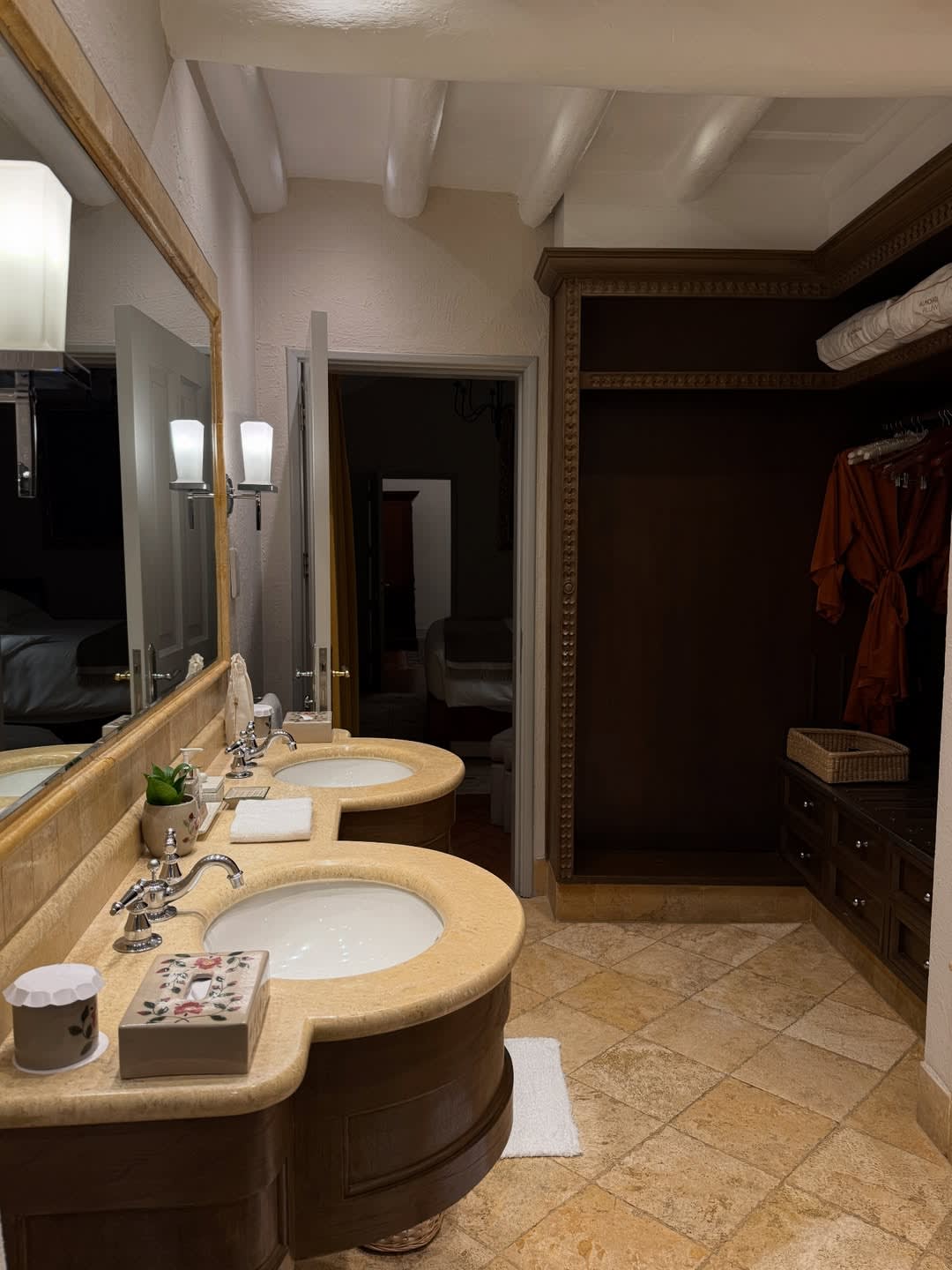
Hotel B sits in Barranco — the old artistic quarter of the capital, a nineteenth-century republican house converted into seventeen rooms, with the Pacific three blocks west and the gallery district within walking distance. The scale is deliberate. Not a tower, not a brand with eight hundred rooms, but a house where the staff knows which room the couple is in and the concierge has a relationship with the reservation lists at the restaurants worth eating at. For the first night of a honeymoon, scale matters more than amenity.
The first day is rest: a shared spa ritual, the adjustment of bodies that have crossed twelve time zones. Lima sits at sea level. The Sacred Valley, which the couple reaches on Day 3, rises to 2,800 metres. The body that slept well in Barranco will ascend better.
The evening is for the gastronomy the capital does better than anywhere else in the country. Maido, in Miraflores, is the Nikkei kitchen that applies Japanese technique — precision, restraint, the primacy of the product — to Amazonian ingredients: the fruits, the fish, the chillies of the jungle interior. The result is a cuisine that does not exist outside Lima. Alternatively: Mater Table at Central, a tasting menu of seventeen Peruvian ecosystems — each course arriving from a different altitude, from the sea surface to the high puna. The couple that chooses this table on the first night will recognise the landscapes it maps by the time they reach Cusco.
For couples who prefer to base in Miraflores rather than Barranco: the Westin Lima offers its Pacific Spa and the clinical efficiency of a five-star international property. Both hotels serve the Lima movement. The difference is a choice about which city they want to enter first: the artistic quarter or the financial district, the republican house or the Pacific tower.
Movement II — The Sacred Valley: the deceleration (Days 3–4)
The Sacred Valley does not announce itself. The flight from Lima to Cusco takes one hour. The drive from Cusco airport into the valley takes forty minutes. And then the road drops into a landscape that runs at a frequency the couple has not encountered: wide, agricultural, the Urubamba River silver below, the terraced fields of Pisac rising above. The mountains here are not dramatic in the Alpine sense — they are close, and they watch.
Belmond Río Sagrado sits inside this landscape with the discipline of a property that understands its function. The rooms open to the river. The gardens are kitchen gardens — paths from the suites to the main terrace run beside herbs and vegetables the kitchen uses that day. The rhythm here is slower than Lima by design: breakfast that takes an hour, an afternoon without a programme, an early dinner that ends because the darkness outside becomes absolute and quiet.
Two experiences belong to the Valley days. The first is the Pisac market, visited privately — not on Saturdays, when the tourist circuit arrives in volume, but on a morning Kada arranges with access before the stalls fill. The weaving cooperatives that operate in the village work in materials and techniques not found in any Lima shop: natural dyes drawn from plants and insects, backstrap looms that require a decade to master. A conversation with a master weaver in Quechua — translated, partially — rewrites what a purchase means. The second is lunch at Hacienda Huayoccari, a private estate in the agricultural valley — a family table, the fields visible from the dining room, the meal unhurried in the way that lunches in the valley are unhurried. Not a restaurant in the conventional sense; it receives guests by prior arrangement.
By the second evening in the Valley, the couple is already slower. The altitude — approximately 2,800 metres — settles over a day or two not as discomfort but as a barometric recalibration. The body that walks without urgency in Pisac will sleep more deeply at Sanctuary Lodge, two thousand feet higher at Aguas Calientes.
Inkaterra Hacienda Urubamba works as an alternative for couples who prefer a smaller, more agricultural property. The choice between them is a choice about which version of the Valley they want to remember.
The central anchor — Day 5: the despacho with a Q'ero paqo
On the fifth day, the itinerary stops being an itinerary.
The despacho is a ceremonial offering of the Andean tradition — a structured rite in which the paqo prepares a bundle of offerings and burns it as a gift to the Apus, the mountain spirits, and to Pachamama. The ceremony is not a performance. It has a specific purpose at each occasion: to open a road, to give thanks, to mark a threshold. In a honeymoon, the threshold is the obvious one.
The paqo Kada works with is a Q'ero man from the high puna communities above Cusco — communities that preserved the pre-Columbian ceremonial tradition without syncretising it entirely into colonial Catholic practice. He does not speak Spanish fluently. The ceremony is conducted in Quechua. The translation that follows is partial and adequate: some of what is said is not for translating.
The couple sits on a blanket. The paqo builds the offering on a sheet of white paper: flowers, seeds, sweets, k'intu — three coca leaves placed together with intention. He speaks directly to the mountains. He names the couple. He names the journey ahead. The Apus, in Andean cosmology, witness what the couple is beginning.
What the despacho does to a honeymoon is difficult to categorise in the language of travel. It is not adventure. It is not gastronomy. It is not culture in the museum sense. It is the moment in which the trip becomes a rite rather than a sequence. The couple crosses from tourist to pilgrim — not as metaphor, but as felt experience.
Kada places the ceremony on Day 5 for this reason. Not at the beginning, when the couple is still adjusting to the altitude and the change of pace. Not at the end, when the trip is closing. At the centre — between the valley and the sanctuary, when the body has acclimatised, the rhythm has slowed, and the couple is ready to receive what the mountains have to say.
Movement III — Machu Picchu: the shared dawn (Days 6–7)
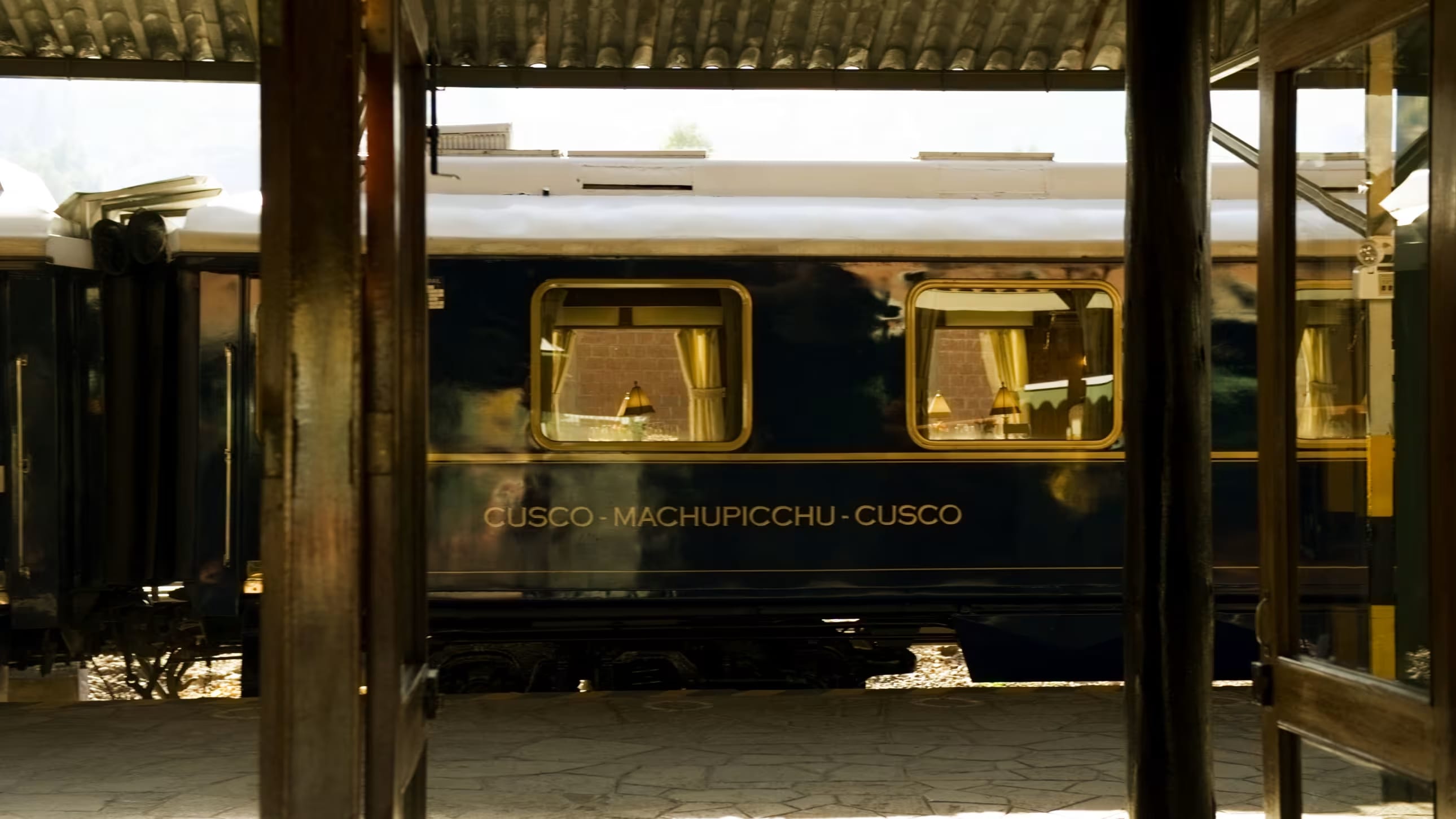
The Belmond Hiram Bingham train departs Poroy station in the early afternoon — a different departure point from the standard Aguas Calientes trains. The Hiram Bingham runs from Cusco through the Sacred Valley in four hours of declining altitude and increasing forest density, with a dining car, a bar car, and windows that occupy the full wall of the carriage. This is not a transfer. It is a transition — the last quiet movement before the sanctuary.
The distinction matters. A couple moving from the Valley to Machu Picchu by road loses the approach. The train gives the landscape time to change in view: to become denser, lower, warmer, greener — from the high agricultural plateau to the cloud forest — before the sanctuary appears.
Belmond Sanctuary Lodge is the only hotel inside the Machu Picchu sanctuary gates. Thirty-one rooms. No spa, no pool, no lobby bar competing with the view outside. The lodge exists for one purpose: to place the guest at Machu Picchu before anyone else arrives and after everyone else has left.
Two nights are required. The first is for the sunrise.
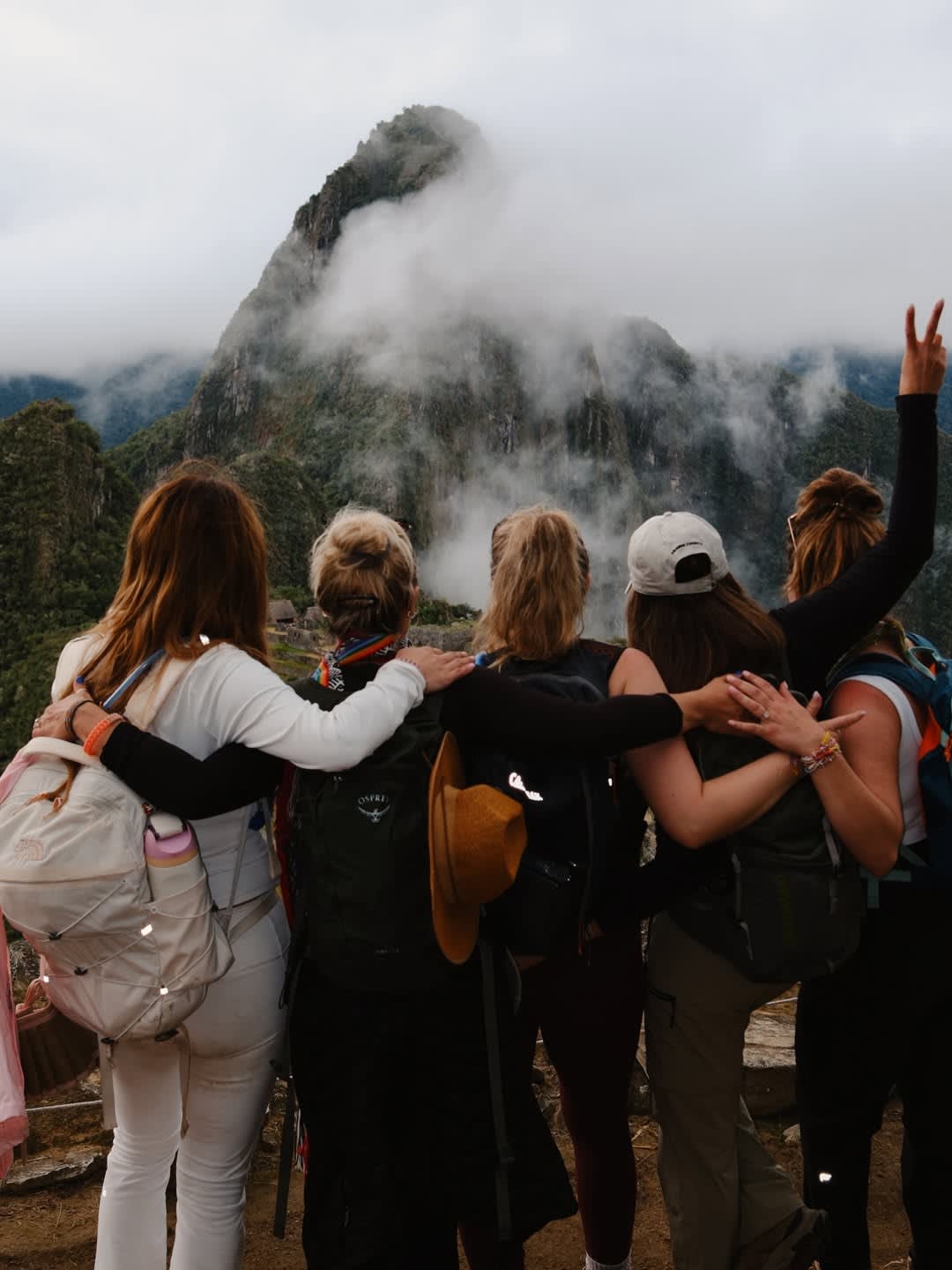
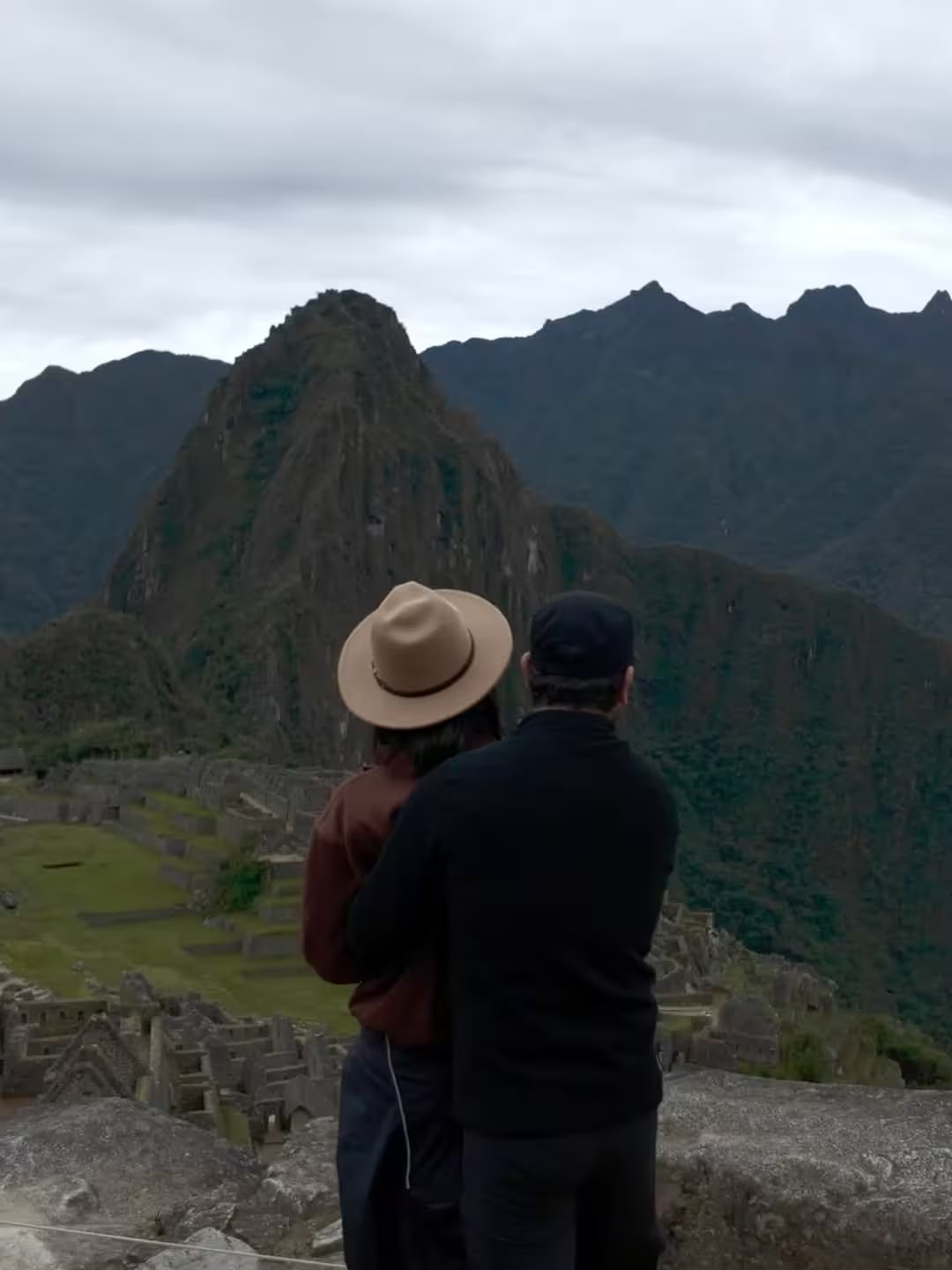
The couple wakes at 4:45 AM on Day 7. The site opens at 5 AM for Sanctuary Lodge guests — the access that cannot be replicated from Aguas Calientes, where the first buses do not depart until 5:30. By 5:10, the couple stands at the Templo del Sol. The light at that hour is horizontal and golden, arriving at the stone at angles the midday sun never reaches. No tour groups. No narrated audio. No crowds at the agricultural terraces. The couple and the stones and the light and the silence — for approximately forty minutes before the first buses arrive from below.
The second day at the sanctuary is for the late afternoon. By 3 PM the day-trip crowds are retreating toward Aguas Calientes. By 4 PM the terraces are nearly empty. The couple walks without a route. This is Machu Picchu as the lodge guest experiences it: not as a site to understand in two hours, but as a place to inhabit.
Sanctuary Lodge must be reserved eight to twelve months in advance. Kada coordinates this as a matter of course.
Movement IV — Cusco: the capital without urgency (Days 8–9)
After Machu Picchu, Cusco is a relief.
The couple arrives at the city they have been approaching since Lima — implied by the altitude of the Valley, confirmed by the ceremony, approached by train through the cloud forest, now explicit in the Plaza de Armas and the colonial archways and the Inca foundations running beneath the Spanish walls. At 3,400 metres, Cusco is the highest point of the itinerary. But the body that has acclimatised through the Valley and Aguas Calientes arrives without the crisis altitude usually produces in travellers who fly directly from Lima.
Inkaterra La Casona occupies a colonial mansion in the Centro Histórico — eleven suites, no on-site restaurant, an inner courtyard with a stone fountain and a library of Andean history. The smallest hotel in the Centro, and the quietest. The concierge coordinates meals at neighbouring establishments rather than managing a room-service kitchen — this shifts the concierge function toward genuine local guidance. For couples who prefer to sleep in San Blas — the artisan quarter above the Plaza, cobblestones, a slower register — Casa Cartagena offers the same intimacy of scale with valley views from its terraced garden.
Day 8 holds the central meal of the entire ten days: lunch at MIL Centro in Moray. Virgilio Martínez built the kitchen into the circular Inca terraces above Chinchero — an agricultural research site for Andean food systems, not a restaurant in the conventional sense. The menu changes with the altitude and the season; the setting is an open field surrounded by concentric stone rings that predate the colonial city by five hundred years. A table here requires booking as soon as the travel dates are confirmed.
Day 9 is the MAP Café — the restaurant inside the Museo Larco's Precolumbian collection, arranged as a private visit after the museum's public hours close. The couple moves through the gold, the ceramics, and the textiles without crowd or time pressure, with a curator rather than an audio device, in the particular silence of objects that have survived three thousand years.
By the second Cusco evening, the couple has the city without the itinerary. San Blas after dark. The Plaza at an hour when the tourist volume has quieted. A pisco sour on a terrace above the valley. Cusco without urgency, at last.
Day 10: the optional adventure day
The tenth day belongs to the couple's instinct.
Kada presents options at the planning stage, and the choice is the first purely self-directed decision of the trip — what kind of shared experience do they want to close with?
The hot-air balloon drifts over the Sacred Valley at dawn — the same valley they passed through on Days 3 and 4, now seen from two hundred metres above it: the river a thread, the terraces a geometry, the mountains closer from the air than they were from the ground. The flight lasts forty-five minutes and requires no physical preparation. The conversation after tends to last longer.
Private horseback riding through the estates above Sol y Luna — the valley at pace, on terrain that requires enough concentration to produce a different kind of quiet together.
Choquequirao is the option for couples who trained before the trip: a trek to the sister city of Machu Picchu, reached by foot only, with fewer than fifty visitors per day. Not appropriate for every honeymoon. The right choice for the right couple.
Kada does not recommend. Kada presents and the couple decides. The day is theirs entirely.
The return (Day 11) — the transition out of the journey
The Peru of the honeymoon is already complete. Day 11 is the return — not a day of the trip, but the threshold between the country and the flight home.
The couple flies from Cusco to Lima in the morning. Lima, at sea level, after the Andean week, feels warmer, more humid, and somehow smaller than when they arrived. This is not disorientation. It is what the country did.
A final lunch at Central — Mater Table, the same kitchen from the first evening, now with a different reading. Each altitude the couple passed through over ten days appears again as a course: the Sacred Valley at 2,800 metres, the puna at 4,000, the cloud forest at 2,000. The couple that arrived knowing none of these landscapes now reads the menu as geography.
The flight departs that evening. Lima closes the parenthesis.
What Kada coordinates in a honeymoon
Most of this itinerary can be researched and assembled by a couple willing to spend six months on the phone. Several elements cannot.
The paqo who leads the despacho is not listed on any booking platform. He is reached through a network of relationships Kada has maintained for years in the Q'ero communities above Cusco. The ceremony is not a service — it is an introduction. Kada introduces.
Sanctuary Lodge availability at peak-season dates requires twelve months of lead time. Kada holds a working relationship with the Belmond reservations team that provides access to availability that does not appear on public channels.
The Hiram Bingham private wagon — if the couple's travel dates align — is coordinated directly through the Belmond network rather than through standard rail booking.
MAP Café after public hours requires the Museo Larco director's authorisation. Kada requests this formally as part of honeymoon itinerary preparation.
Sanctuary Lodge communicates with Kada before the couple's arrival. When the couple returns from the Templo del Sol on Day 7 at 6:30 AM, the room is already rearranged: breakfast on the terrace, champagne cold, the door propped.
Virtuoso benefits apply to Sanctuary Lodge, Belmond Río Sagrado, Hotel B, and Inkaterra La Casona: confirmed room upgrade at booking, daily breakfast included, and late checkout where the property can accommodate.
None of this appears in the itinerary document sent to the couple. It is simply what happens.
Expert Perspective
In 2014, the first Peru honeymoon we designed was for a couple from Barcelona — two climbers who had met at altitude and wanted a trip that matched the seriousness of what they were beginning. We gave them eleven days, the Valley, the ceremony, and the dawn at Machu Picchu. They wrote to us six weeks after they returned. Not to say thank you. To tell us that the trip had shown them something about each other that the years before the wedding had not.
That is the only metric I know how to apply to a honeymoon itinerary: not stars, not press, not the quality of the restaurant. Whether the trip became the story they tell when someone asks how they knew.
A honeymoon in Peru is not for seeing the country. Peru will wait — it has waited five thousand years and it will wait until the couple returns. The honeymoon is for discovering how you travel together. Slowly or fast, in ceremony or in motion, reaching for each other's hand when the mountains are close or holding the moment separately. The answer to that question is worth the flight.
Katherine Cjuiro, Founder, KADA Travel
A Practical Note
Best season: April through October — the Andean dry season. The Valley and Machu Picchu are accessible year-round, but the November-March wet season brings daily afternoon rain at altitude and significant cloud cover at the sanctuary. The dry season guarantees the dawn.
Booking timeline: Sanctuary Lodge requires eight to twelve months for peak-season dates. Belmond Río Sagrado, Inkaterra La Casona, Hotel B, and Inkaterra Hacienda Urubamba require four to six months. MIL Centro should be reserved as soon as the travel dates are confirmed.
Altitude progression: Lima sits at sea level. The Sacred Valley runs between 2,600 and 3,000 metres. Cusco sits at 3,400 metres. Machu Picchu, at 2,400 metres in the cloud forest, is lower than both — often the unexpected relief after Cusco. The itinerary ascends gradually and allows the body to adapt before the highest point.
Written by Katherine Cjuiro
Frequently Asked
Both are possible, and Kada designs itineraries that incorporate them — typically at fifteen to eighteen days. The ten-day arc exists because a honeymoon requires depth, not breadth. The Sacred Valley, the ceremony, Machu Picchu, and Cusco as a sequence allow for the emotional architecture described here. Adding the Amazon or the Paracas coast extends the trip but fragments the arc. Many couples return to plan the Amazon within two years.
No. Some couples prefer not to participate in spiritual ceremonies from traditions outside their own. Kada discusses this at the planning stage and never includes the despacho without explicit confirmation. For couples who prefer not to attend, the fifth day uses the same time for a private visit to a Q'ero weaving community — a different kind of encounter with the same tradition.
The sunrise is the argument. But what Sanctuary Lodge actually provides is the elimination of what makes Machu Picchu difficult: the 5:30 AM bus from Aguas Calientes, the crowd at the Sun Gate, the wait before the terraces clear. Lodge guests access the site at 5 AM — thirty minutes before the first buses below. That window is the only version of Machu Picchu that resembles what the place actually is. Kada discusses this candidly with each couple.
The base itinerary requires no trekking. The Pisac market is flat. The walk to the Templo del Sol from Sanctuary Lodge is thirty minutes, paved, at altitude. Day 10 is calibrated to the couple: the hot-air balloon requires no physical exertion; Choquequirao requires months of preparation. Kada matches the physical demand to what the couple discloses in the planning conversation.
Yes. The properties named here are Kada's editorial recommendation for each moment — the venue that best matches the emotional character of that movement. If a couple has an existing relationship with a specific property, or a strong preference that diverges from the recommendation, Kada adapts. The arc matters more than any single hotel name.
Design Your Journey
Design your bespoke Peru journey
We talk. We listen. Then we design an itinerary that belongs only to you.
Start Planning