Where to Stay· 13 min read·10 December 2024
The Five Relais & Châteaux Houses of Peru
A constellation of five independent properties — in Cusco, the Sacred Valley, Lake Titicaca, Arequipa, and the Amazon — that carry the same red shield. Each earned it differently.
By Daniel Ramos
In Peru, five properties carry the Relais & Châteaux shield. Not fifteen, not twenty — five. The consortium that has defined independent luxury hospitality since 1954 has certified exactly five houses across a country with one of the most complex topographies and richest cultural histories on earth. That number is not a limitation. It is a measure.
The five properties span four ecosystems: the high Andean city, the agricultural valley, the altiplano lake, the desert canyon city of the south, and the primary Amazon rainforest. Each earned the red shield through a process that evaluates character, courtesy, calm, charm, and cuisine — the five C's that Relais & Châteaux has applied since its founding in France. None of them accelerated the process. Two waited years between opening and certification.
What follows is not a ranking. Rankings suggest that one property is better than another, which is not a useful frame when what separates them is geography, scale, and the particular kind of journey each one makes possible. What follows is a map.
What the Relais & Châteaux Distinction Verifies — and What It Does Not
The Relais & Châteaux shield certifies independence. The consortium does not admit chain hotels, branded residences, or properties where hospitality is a secondary function. It certifies that each property is owner-managed or family-managed, that the cuisine meets a standard of culinary identity, and that the experience delivers on each of the five C's with consistency — not occasionally, not only in high season.
What it does not certify is price. Several properties in Peru that command comparable or higher rates than the five certified houses are not members. Some are excellent. What distinguishes a Relais & Châteaux property is not rate — it is the character of management and the culinary commitment that runs through the house.
In Peru, this distinction matters because the luxury hotel market includes several international brands with strong global programs alongside independently managed houses with deep local roots. The R&C properties occupy a specific position: independent, owner-managed, gastronomically serious, and evaluated annually. Certification can be revoked. It is not a historical honor; it is a current standard.
Kada is a Virtuoso member agency. Some R&C properties in Peru also hold Virtuoso preferred status, which means guests traveling through Kada may access preferred benefits — room upgrades where available, complimentary breakfast, early check-in and late check-out, and a welcome amenity. Not all R&C properties simultaneously hold Virtuoso preferred status; this varies by property and by year, and Kada confirms current benefit availability at the time of booking.
Inkaterra La Casona — Cusco
On the Plaza de las Nazarenas, in the convent quarter of Cusco, a colonial mansion built in the sixteenth century became the first certified Relais & Châteaux property in the city. Inkaterra La Casona received its shield in 2010, after the conservation-focused Peruvian hospitality group spent years restoring the structure to a standard that matched its architectural heritage — retaining the original stone walls, colonial wooden ceilings, and the proportions of a seventeenth-century Andean household.
The property has eleven suites. Not eleven rooms — eleven suites, each configured around the original colonial courtyard. The scale is deliberate: small enough that service can be genuinely personal, large enough to feel like a private house rather than a boutique hotel simulation. The silence of the Plaza de las Nazarenas at night, away from the movement of Cusco's main squares, is part of what the property offers without needing to advertise it.
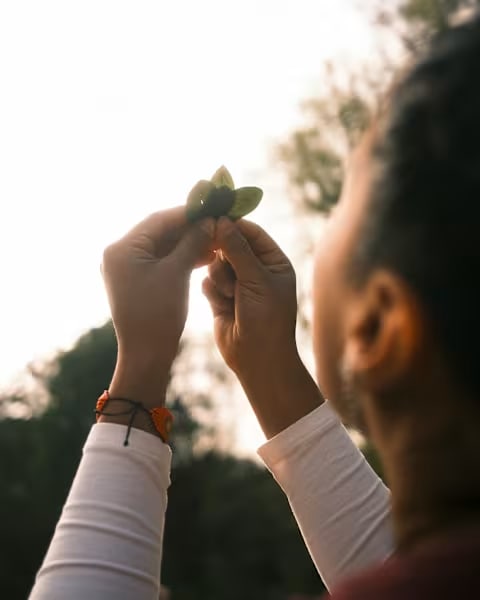
Cusco at 3,400 meters presents a physiological challenge for most travelers arriving from sea level. La Casona manages this through altitude acclimatization protocols that begin before arrival — coca tea, adjusted menus, graduated activity schedules — and through a wellness program that draws on local medicinal plant traditions. The altitude is not concealed; it is managed with knowledge accumulated over years of operating at this elevation.
The culinary program reflects Inkaterra's broader commitment to Peruvian biodiversity. The kitchen sources ingredients through supply chains that connect to the group's conservation network, expressing a culinary philosophy that is consistent across the Inkaterra portfolio — not borrowed from Cusco's fashionable dining scene, but native to the group's own research base.
Sol y Luna — Valle Sagrado
In the Sacred Valley, between Urubamba and Ollantaytambo, a property that is not merely the oldest Relais & Châteaux house in Peru but the one with the deepest case for certification. Sol y Luna received the R&C shield in 2007, making it the first certified property in the country. Seventeen years later, it is also the only property in Peru — and one of a small number in all of South America — to hold a double membership: the hotel carries the Relais & Châteaux badge; the restaurant Wayra carries the Tablette distinction, the R&C designation for exceptional standalone restaurants evaluated on culinary merit alone.
Sol y Luna was founded by a Belgian-Peruvian family and remains under their direct management. This is not incidental detail — it is the argument. The management model, family-owned and family-operated across two decades with no management company interposed between ownership and daily operation, is precisely what R&C evaluates. The family's understanding of the Sacred Valley is generational. They have watched the valley change across the full arc of Peru's tourism development and have made choices about what not to scale as deliberately as choices about what to build.
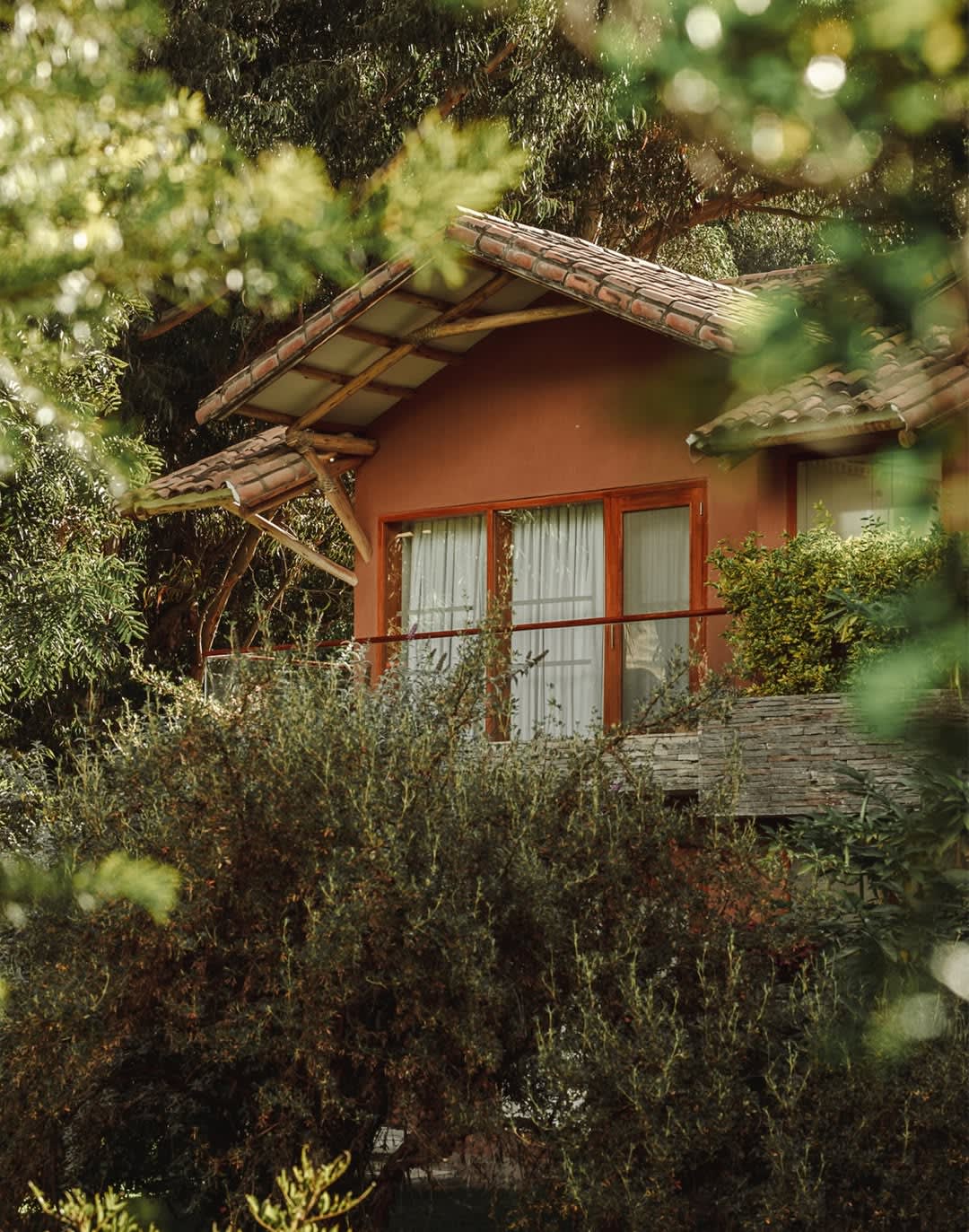
The property is structured around casitas — individual bungalows dispersed across gardens that look toward the snow peaks enclosing the valley. The layout creates a degree of privacy that a central building cannot replicate: guests do not share corridors, and the transition from suite to private garden to mountain horizon is seamless. In the Sacred Valley, where the landscape is the primary experience, this spatial intelligence matters more than square footage.
Wayra, the restaurant, earned its Tablette membership independently. The Tablette distinction is not awarded because the adjacent hotel holds an R&C badge — it is awarded because the restaurant's culinary identity and execution meet the standard on their own terms. Wayra's cooking is rooted in Sacred Valley ingredients: the extraordinary biodiversity of Andean grains, native potato varieties, wild herbs, and river produce that grows at altitude across these slopes. The kitchen has been serious about this territory for years, not months, and the menu reflects accumulated local knowledge rather than trend-driven interpretation.
The Sol y Luna Foundation operates parallel to the hospitality program. The Foundation funds community education in the Sacred Valley — supporting local schools and vocational training in communities adjacent to the property. Guests who visit the Foundation's projects encounter a philanthropic commitment that is structural, not ornamental: built into the property's operational budget, not offered as an optional excursion. The equestrian program, which draws on the Peruvian Paso horse tradition, functions similarly. It began as an expression of local culture and became central to the property's identity — not an amenity appended to a hotel, but a discipline that reflects the family's relationship with the valley over time.
Sol y Luna's position in any Peru itinerary is precise: it is the property that combines Sacred Valley geography, the highest level of R&C culinary distinction available in the country, a philanthropic program with direct community legibility, and a management continuity that most luxury properties cannot offer. No other certified property in Peru does all four simultaneously.
Titilaka — Lake Titicaca
At 3,812 meters above sea level, on a private peninsula on Lake Titicaca, Titilaka received the R&C Lodge designation — a specific classification within the consortium that recognizes exceptional lodges in natural environments, distinct from the hotel category. Lodge properties are evaluated for their integration with landscape and for the quality of access they provide to places and cultures that cannot be reached through standard hospitality infrastructure.
Titilaka's location on Lake Titicaca places it in direct proximity to the Uros floating islands, the Taquile island communities, and the open altiplano landscape that defines southern Peru's visual and cultural identity. The property operates its own boat excursions, which means access to these destinations is managed to a standard — departure times, group size, guide quality — that the commercial ferry routes cannot match.
The property has eighteen suites, all with lake orientation. At this altitude, the light on Titicaca changes continuously: the blue of the lake shifts with the angle of the sun against the altiplano sky throughout the day in ways that cannot be captured in a single photograph. The experience is fundamentally temporal — it requires time to observe properly. Titilaka's program is organized around that observation, with departures and mealtimes calibrated to the rhythms of the lake rather than to a standard hotel schedule.
The culinary program works with ingredients native to the Titicaca basin: quinoa varieties that do not exist in commercial form, fresh fish from the lake, tubers from the altiplano that appear in no other cuisine on earth. The kitchen's commitment to the biogeography of the lake is the culinary counterpart to the property's spatial commitment to the landscape.
Cirqa — Arequipa
The most recently certified Relais & Châteaux property in Peru, Cirqa received its shield in 2018. It is also the only certified property in Arequipa, a city whose colonial architecture — built from white volcanic sillar stone — constitutes one of the most coherent urban heritage environments in South America.
Cirqa occupies a colonial building that underwent rigorous restoration, retaining the original sillar walls and the proportions of Arequipa's colonial domestic architecture while introducing contemporary comfort at a standard the original structure did not support. The restoration process was itself the certification argument: a property that understood Arequipa's architectural heritage well enough to restore rather than demolish was precisely the kind of character-driven, independent house that R&C recognizes.
The scale is intimate — fewer than twenty rooms organized around a central courtyard in the colonial manner. The culinary program draws on the Arequipa regional tradition, one of Peru's most distinctive: rocoto relleno, chupe de camarones, adobo arequipeño. Arequipa has long maintained that its culinary identity is independent from Lima's, and the kitchen at Cirqa operates within that position — rooted in local technique, sourced from local producers.
Cirqa is positioned as the natural base for Colca Canyon access: two hours from the canyon rim, close enough to structure a multi-day program that includes the canyon, the condor viewpoints at Cruz del Cóndor, and the thermal baths at Chivay. The R&C certification makes it a credible luxury anchor for a south Peru journey that would otherwise have no equivalent in the city itself.
Inkaterra Reserva Amazónica — Tambopata
The fifth certified property is the most remote. Inkaterra Reserva Amazónica sits on the Madre de Dios river within the Tambopata reserve, accessible by a forty-five minute boat journey from Puerto Maldonado. It received the R&C shield in 2009 — a year before La Casona — making Inkaterra the first hospitality group in Peru to hold two simultaneous Relais & Châteaux certifications.
The property is structured as a lodge: elevated bungalows connected by covered walkways through primary Amazon rainforest, with the river visible or audible from most rooms. The Amazon context changes what luxury means. The standards of comfort that apply in Cusco apply here, but the environment adds a category that urban properties cannot offer. Primary rainforest is irreplaceable; the presence of a certified property within it is an argument about what conservation-committed hospitality can look like when it is taken seriously.
Inkaterra's conservation programs in the Amazon operate through ITA — the Inkaterra Association — which has conducted botanical and zoological research in the Tambopata reserve for decades. The research is not decorative: it has produced catalogued species counts, reintroduction programs, and long-term biodiversity data that Peru's conservation community continues to use. Guests at the Reserva Amazónica have access to guided programs developed from this research base — excursions led by naturalists who work within the research framework, not generalist guides reading from a script.
The culinary program works within the logistical constraints of a remote Amazon setting, which makes its standard of execution a different kind of achievement than the restaurants in Cusco or the Sacred Valley. What arrives at the table has been sourced from the Amazon basin — river fish, wild herbs, native fruits — interpreted through a kitchen philosophy that reflects the ecology of the reserve.
The Inkaterra Family and the Property Ecosystem
Inkaterra operates four properties in Peru. Two carry the R&C shield: La Casona in Cusco and the Reserva Amazónica in Tambopata. Two are part of the same family without the certification: the Machu Picchu Pueblo Hotel in Aguas Calientes and the Hacienda Urubamba in the Sacred Valley.
This distinction does not reflect a quality difference within the Inkaterra portfolio. The Pueblo Hotel, which sits within a cloud forest reserve adjacent to Machu Picchu, operates within the same conservation philosophy that defines the R&C-certified properties. The Hacienda Urubamba, a more recent addition, shares the group's sourcing and culinary commitments.
For travelers designing a Peru itinerary with Kada, the Inkaterra family represents a coherent option across multiple geographies: certified R&C properties in Cusco and the Amazon, and family-consistent options for Machu Picchu access and additional Sacred Valley time. The group's conservation work — through ITA and through the biodiversity programs at each property — runs as a continuous thread across all four houses.
The Five as an Itinerary
Five properties. Four ecosystems. One country. The exercise of assembling them into a single journey is not theoretical — Kada has structured multi-week Peru itineraries that move through all five R&C houses, using the logic of the properties themselves as the journey's architecture.
The sequence most often used moves from Cusco (La Casona, two to three nights) to the Sacred Valley (Sol y Luna, two to three nights) before Machu Picchu access, then south to Puno and Titicaca (Titilaka, two nights), with Arequipa and Cirqa as either the journey's close or its opening chapter depending on flight connections. The Amazon — Inkaterra Reserva Amazónica — works as an extension that does not require interrupting the Andes sequence: it flies separately from Lima or Cusco, and three nights minimum justify the transfer logistics.
The logic is not that all five must be combined. It is that each property is a credible choice within its geography, and that building a Peru itinerary around certified independent properties produces a different kind of journey than building around international chain brands: more embedded in place, more consistent in culinary philosophy, more directly connected to the conservation and cultural commitments that define what these properties chose to become.
What Kada Arranges
Kada is a Virtuoso member agency based in Lima. For R&C properties that also hold Virtuoso preferred status, Kada can offer guests preferred benefits: breakfast, room category upgrades where available, early check-in and late check-out, and a welcome amenity — confirmed at the time of booking, as status varies by property and year.
Beyond the booking, Kada structures the program around the properties: altitude acclimatization protocols before arrival at high-elevation houses, private transfers calibrated to the pace of each property rather than the schedule of shared shuttles, guided access to the conservation and cultural programs each house facilitates, and restaurant reservations — including Wayra at Sol y Luna — coordinated within the itinerary.
The Inkaterra Association programs, the Sol y Luna Foundation community visits, and the Titilaka boat excursions require advance scheduling, sometimes with significant lead time. Kada coordinates these as part of itinerary design rather than leaving them to the property concierge to arrange on arrival.
Editorial Perspective
By Daniel Ramos, Co-Founder & CEO, Kada Travel
Five properties. Peru has five. I have been to all of them, several of them many times, and the number continues to strike me as correct — not inadequate.
Relais & Châteaux does not certify by country quota. It certifies by standard. The fact that Peru — a country with extraordinary hospitality infrastructure, with properties that command significant rates, with a culinary reputation that has changed how the world thinks about South American food — has produced exactly five certified houses tells you something about the standard. It is demanding. It is applied annually, not awarded for life.
The phrase I keep returning to when I think about this article: Five properties for an entire country. That scarcity is an editorial virtue. I believe it. The five C's — Caractère, Courtoisie, Calme, Charme, Cuisine — are not marketing language. They are evaluation criteria, and each property in this list has passed them consistently enough to retain certification year after year.
What I would add is something I do not see articulated clearly enough in writing about Peru's hospitality: these five properties together represent a journey through four completely distinct ecosystems without repeating a landscape. Cusco's colonial high city. The agricultural valley below the snow peaks. The altiplano lake at the edge of Bolivia. The desert canyon of the south. The primary Amazon rainforest. No other country in South America can offer a certified Relais & Châteaux journey through that range of ecosystems in a single trip. That is a structural argument for Peru that has nothing to do with price or brand recognition. It is geography, and it is remarkable.
A Practical Note
R&C certification is reviewed annually. Properties can lose certification if standards decline. The five properties listed here carry current certification as of the publication date of this article.
The Tablette distinction at Wayra (Sol y Luna) applies to the restaurant's independently evaluated culinary program. Dining at Wayra is open to non-hotel guests by reservation and is worth scheduling regardless of accommodation choice in the Sacred Valley.
Virtuoso preferred benefits at R&C properties vary by property and by year; Kada confirms current benefit status at the time of booking. Not all five properties hold Virtuoso preferred status simultaneously.
Transfer logistics to Inkaterra Reserva Amazónica require a flight to Puerto Maldonado from Lima or Cusco, plus a forty-five minute boat transfer coordinated by the property. Minimum recommended stay is three nights.
Frequently Asked Questions
Why aren't Belmond properties — Palacio Nazarenas, Hotel Monasterio — on this list? Belmond is a branded hospitality group owned by LVMH. Relais & Châteaux does not certify chain-branded properties or properties managed by international hospitality groups. Palacio Nazarenas and the Hotel Monasterio operate at comparable luxury standards and hold other distinctions — Leading Hotels of the World, Virtuoso preferred — but the R&C shield requires independent or family management. This is not a quality distinction; it is a structural one.
What about Aman properties in Peru? Aman is a branded chain. Same answer: the R&C model requires independent management. Aman operates under a brand framework that is structurally incompatible with R&C certification.
Are Central and MIL Relais & Châteaux? Central in Lima and MIL Centro in Moray, Sacred Valley, hold R&C Tablette designation as restaurants. Tablette is a separate membership category for exceptional standalone restaurants, evaluated on culinary merit independently of any adjacent hotel. Wayra at Sol y Luna is the only Tablette restaurant in the country also associated with a certified R&C hotel.
Can these properties be booked without Kada? Yes. All five accept direct bookings through their own websites and through R&C's global booking platform. Booking through Kada as a Virtuoso member agency may provide preferred benefits at properties with current Virtuoso preferred status — benefits typically not available on direct bookings or through OTAs.
Is Inkaterra Machu Picchu Pueblo Hotel a Relais & Châteaux property? The Pueblo Hotel is part of the Inkaterra family. Its current R&C certification status should be confirmed directly at the time of booking — property memberships change. Inkaterra La Casona and Inkaterra Reserva Amazónica are the two confirmed R&C-certified properties within the group.
Written by Daniel Ramos
Design Your Journey
Design your bespoke Peru journey
We talk. We listen. Then we design an itinerary that belongs only to you.
Start Planning